High security · Brampton
Safe Opening & Combination Change
The bookkeeper who set the office safe's code retired in a hurry, and the float cash for tomorrow's registers is sitting behind a keypad nobody else in the building can operate.
Safe Opening & Combination Change
In plain words
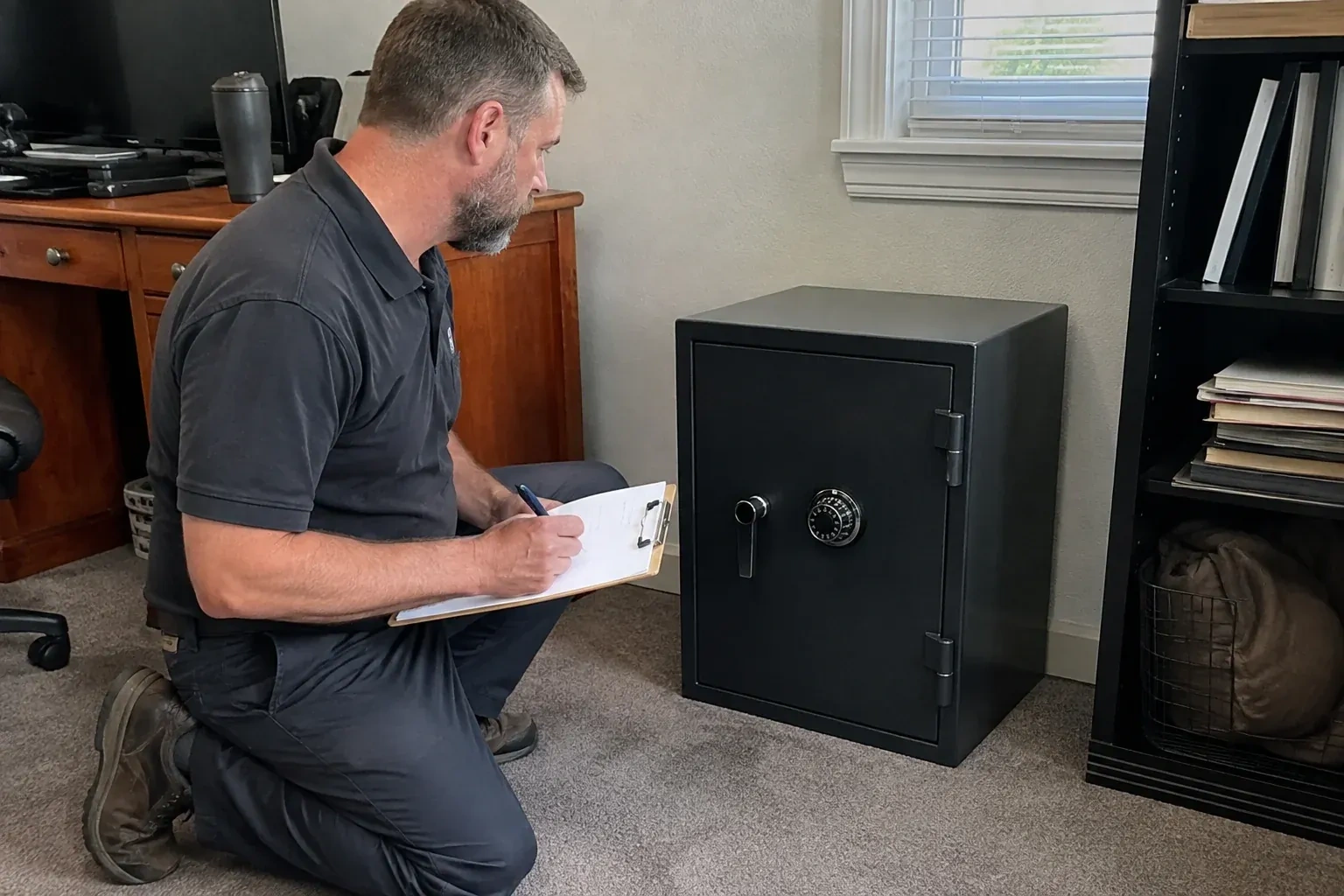
Changing a combination is not only for a safe that has stopped opening. Businesses routinely have a working safe recombined the moment someone who knew the old code leaves, retires or changes roles, because a combination known outside the current staff is a loose end worth closing on its own. The visit is short when the safe already opens fine: confirm authority, dial or key in the old combination, set a new one, and test it before anyone signs off on the work.
How the visit goesThe new manager took over the shop last month and only now needs the back-office safe open, but the combination the previous owner was supposed to leave in writing never turned up anywhere in the handover file.
Brampton
How the visit goes
What is inside and what timing matters
Contents shape how carefully an opening proceeds. Cash drawers, business records, prescription logs, jewellery or firearms each carry their own handling expectations once the door swings open, and the locksmith asks about them upfront rather than assuming. Business hours, an upcoming audit, or a room that needs to be usable again also factor into how the visit is planned, without changing which opening method is chosen. Knowing what is behind the door and what else is happening around the visit lets the locksmith sequence the work sensibly rather than working blind.
Setting and testing the new combination
With the safe open and the lock confirmed sound, a new combination or code is set, with the current owner choosing the numbers themselves within whatever range and spacing that lock's rules allow, rather than being handed a default. For a mechanical lock this means using a change key to reset the wheel pack to the new sequence; for an electronic lock it means entering the new code through the keypad or a connected programming tool. The new combination is then dialed or keyed in several times, with the door open and then closed, before the visit is considered finished, so any mistake surfaces on the spot rather than the next morning.
A little care keeps the lock reliable
A mechanical dial benefits from being turned through a full combination cycle occasionally even when the safe is not otherwise in use, since a dial left untouched for years is more likely to develop the stiffness that led to this visit. An electronic keypad benefits from a battery change on a set schedule rather than waiting for a low-battery warning to appear, since a dead battery at an inconvenient moment is the more common failure than the lock itself. Wiping the keypad and dial face of dust occasionally, without any liquid cleaner, keeps both types responding the way they should.
Safe Opening & Combination Change
In the van
- Spindle and drive cam
- Combination change key
- Dial decoding instrument
- Replacement dial and ring
- Repair plug and patch plate
What affects the quote
Same fees day, night or weekend
1Security rating of the existing lock
A higher-rated lock, such as a UL Group 1 mechanical lock, generally takes longer to manipulate or decode than a basic Group 2 lock, and that time is reflected in the visit.
2Whether model or service records are available
A visible data plate, a purchase receipt or a manual on hand speeds up identifying the exact lock; a safe with none of that takes a few extra minutes to assess on site.
3Number of new codes needed afterward
Setting one combination for a single owner is the simplest case; programming separate codes for several staff members on an electronic lock takes correspondingly more time.
Safe Opening & Combination Change: questions
What should I have ready before the visit?
The safe's brand and model if you know them, whether the lock is a dial, a keypad or a key, roughly how old the safe is, and how the combination was lost or forgotten. Mention whether the safe holds anything with its own handling needs, such as firearms or business records, and how many people should have the new code afterward.
Do you need to see proof that I own the safe before opening it?
Yes, and it is meant as a protection rather than a hurdle. For a business, identifying yourself as the owner, manager or an authorized employee is usually enough. For an estate, a secondhand purchase or a change of ownership, a bill of sale, transfer document or executor's paperwork fills the same role. This step protects whoever actually has a claim on what is inside the safe, which includes you.
I bought the safe secondhand and have no idea of the combination. Can it still be opened?
Yes. A safe with no known history is treated as an unknown from the start: the locksmith identifies the make, model and lock type directly from the hardware and works through the same manipulation, decoding or reset options used on any other safe. Proof of the purchase or transfer establishes your authority to have it opened, and the process afterward does not depend on any prior record existing.
High Security Locks
Safe Opening & Combination Change near you
The services offered in Brampton answer the questions a door eventually asks. Who else has a key? Why does the bolt drag? Would a stronger cylinder be worth it? Can staff leave without a key? How do I open the safe my father left? Each answer is on the pages below.