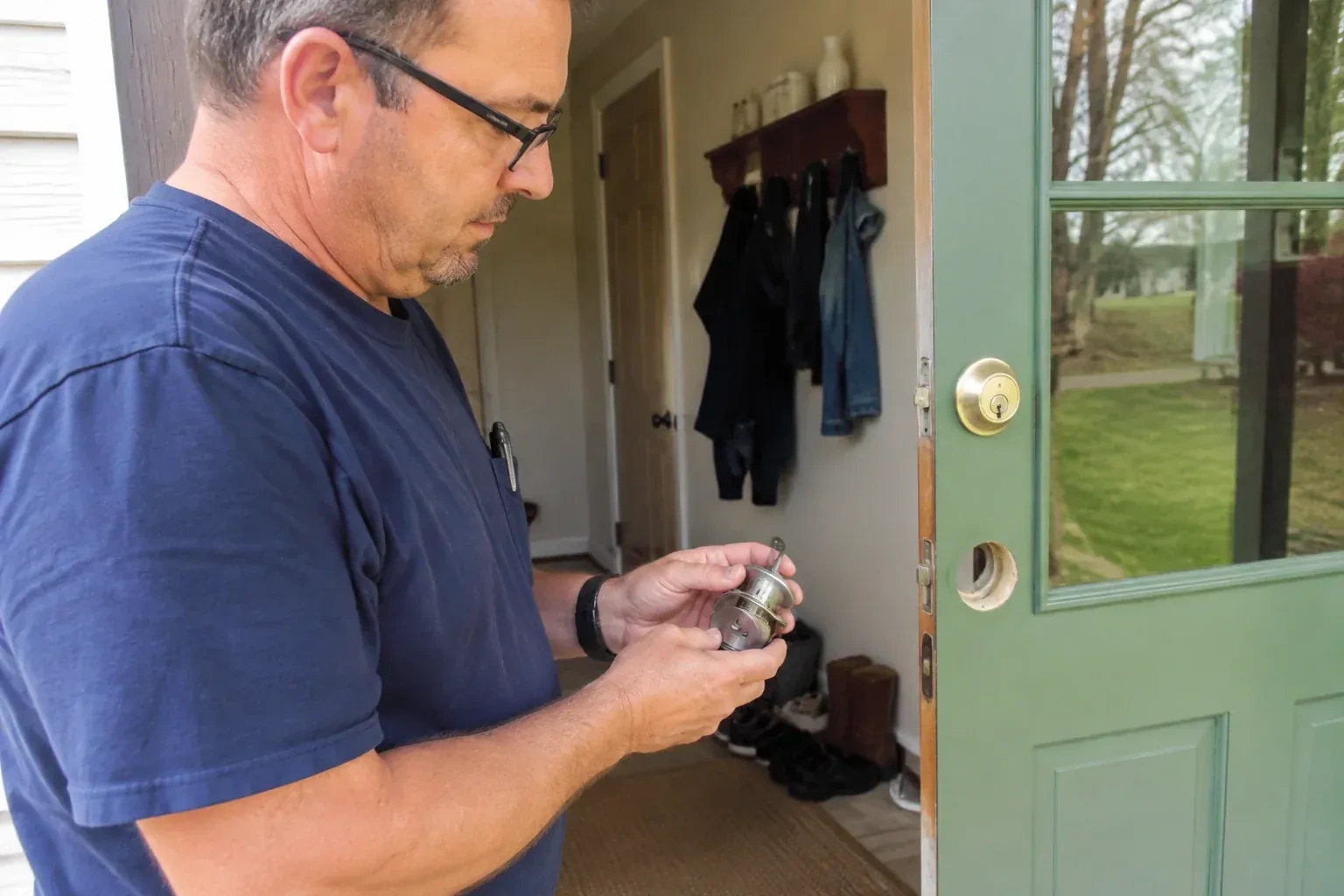
Lockouts · Brampton
Seized & Jammed Lock Opening
The key turns a full circle without any resistance and the deadbolt stays exactly where it is. There is no click, nothing moves behind the face of the lock, and the door is as closed as it was before you touched it.
Seized & Jammed Lock Opening
In plain words
A lock rarely seizes without warning. It asks for a wiggle, then a firmer wiggle, then it needs the door pulled toward you, and one morning it stops. Seized and jammed lock opening deals with that morning, but the same visit deals with the months before it. The locksmith explains why this lock jammed, whether it was grit, weather, a worn key or a door that moved, and leaves you with a lubrication routine, a fresh key cut from code rather than from a tired copy, and a door that closes without a shove. The point is a lock that turns with two fingers and keeps doing so.
How the visit goesThe key slides all the way in, exactly as it has for years, and then refuses to turn in either direction. Yesterday it needed a small wiggle. This morning it feels set in concrete, and pushing harder only makes the key flex.
Brampton
How the visit goes
The key in your hand
Before blaming the lock, the locksmith looks at the key. A key that has been copied from another copy several times drifts away from the true cuts, a worn key no longer lifts the pins to the shear line, and a bent key binds before it is fully seated. If an original or a rarely used spare exists, it is tried; a lock that opens with the spare has told you the problem. Some cylinders also retain the key until the plug is returned to its neutral position, and a key that seems trapped may simply be a plug that has not come back. A fresh key cut from the code is a common outcome.
Thawing ice and clearing salt
Ice is melted, never chipped. A lock de-icer or gentle warmth on the cylinder face turns the frozen meltwater back to liquid so it can drain, and the key is then worked until the plug turns. Boiling water is kept well away, because it refreezes inside and can crack cold brass. Salt crust is flushed out with contact cleaner and the plug is dried thoroughly before any lubricant goes in, since salt and moisture sealed under lubricant keep corroding. The cylinder is then dressed with the lubricant specified for that product, applied once everything is dry. If the weatherstrip has frozen to the door, that bond is released and the seal wiped.
The early warnings to act on
A lock gives notice before it seizes, and now you know the signs. A key that needs a jiggle to seat, a plug that turns stiffly on cold mornings, a bolt that drags in its pocket, a lever that returns slowly, or a key that comes out gritty are all invitations to act while the fix is small. Stop as soon as a key begins to bend; a snapped key turns a service call into an extraction. A puff of dry lubricant or a turn of the strike screws often settles it, and a call while the lock still turns is a shorter visit than a call after it stops.
Seized & Jammed Lock Opening
In the van
- Strike plate and hinge shims
- Electronic contact cleaner
- Plug follower and repinning kit
- Lock de-icer
- Cylinder springs, pins and cap
What affects the quote
Same fees day, night or weekend
1Signs of an earlier struggle
A key snapped in the plug, a twisted cylinder or a bent latch from a screwdriver adds an extraction or a repair to the opening, and the locksmith points that out before quoting it.
2Cutting fresh keys
If a worn key was part of the trouble, keys cut from the code or a fresh master are counted individually, so say how many the household or staff need.
3Door and hinge adjustment
When the door caused the jam, hinge screws, shims, a strike move or a deepened bolt pocket are quoted as their own line beside the opening.
Seized & Jammed Lock Opening: questions
How do I stop this from happening again?
Three habits cover most of it. Lubricate the cylinder with a dry lock product twice a year and keep oils out of it. Check that the door locks with no pressure on it each spring and fall, snugging hinge and strike screws when it starts to drag. Keep a lock de-icer handy and fit a keyhole cover on exposed doors. And act on the first stiff turn, because a lock that still turns is a smaller job than one that has stopped.
Can a seized lock be opened without damaging it?
In most cases, yes. A bolt held by the door is freed by relieving the pressure on the door. A cylinder clogged with grit or ice is cleaned and thawed until it turns. A failed tailpiece is bypassed and replaced. The lock stays on the door with its finish and your existing keys. A plug or shell that is worn, damaged, or eaten through by corrosion or earlier forcing is what has to be replaced, and that is explained before any work starts.
If the cylinder is replaced, can it be keyed to my existing key?
Often, yes. A replacement cylinder in the same keyway can be pinned to the cuts on the key already on your ring, so the front and back doors stay on one key and nothing else in the house changes. If the old keyway is no longer made or the key is badly worn, the new cylinder comes with fresh keys and the other doors can be rekeyed to match in the same visit.
Lockout Services
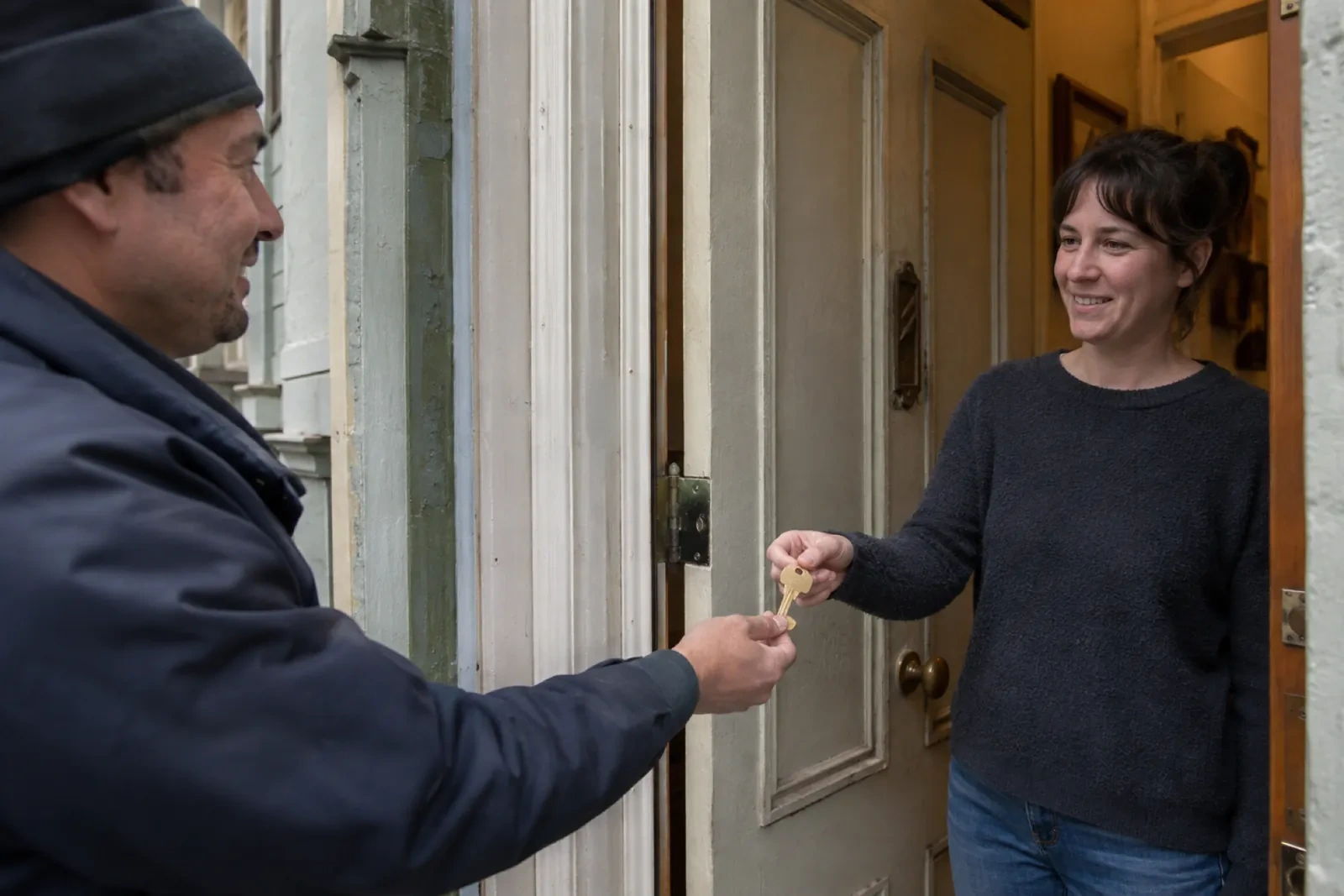
- Business Lockout ServiceAfter last night's power flicker the card reader beside the clinic door shows nothing.
- Broken Key ExtractionThe apartment key snapped mid-turn, leaving the cylinder twisted halfway between locked and open.
- Break-In Damage Lock RepairPolice have come and gone, the occurrence number is on a sticky note, and you are standing in a…
Seized & Jammed Lock Opening near you
The services offered in Brampton answer the questions a door eventually asks. Who else has a key? Why does the bolt drag? Would a stronger cylinder be worth it? Can staff leave without a key? How do I open the safe my father left? Each answer is on the pages below.