Lockouts · Brampton
Break-In Damage Lock Repair
Police have come and gone, the occurrence number is on a sticky note, and you are standing in a cold hallway looking at a splintered frame, wondering how the house gets locked before everyone tries to sleep.
Break-In Damage Lock Repair
In plain words
In a rental or condo the repair involves more than one set of hands. A tenant reports the break-in to the landlord or property manager, who normally arranges the work, because landlords are responsible for repairs and both sides have rules about changing locks and sharing keys. The locksmith secures the door on an authorized instruction, keeps the suite door openable from inside, uses hardware suited to a fire-rated corridor door where that applies, and leaves a clear note of what was done so keys can be handed over properly. Tenants and owners each end up with a working, lockable door and a record they can pass along.
How the visit goesThe shop's aluminum door has a bent meeting stile and the hookbolt is jammed half out. The alarm did its job and the display is untouched, but the entrance will not close properly and opening time is hours away.
Brampton
How the visit goes
Photographs before parts move
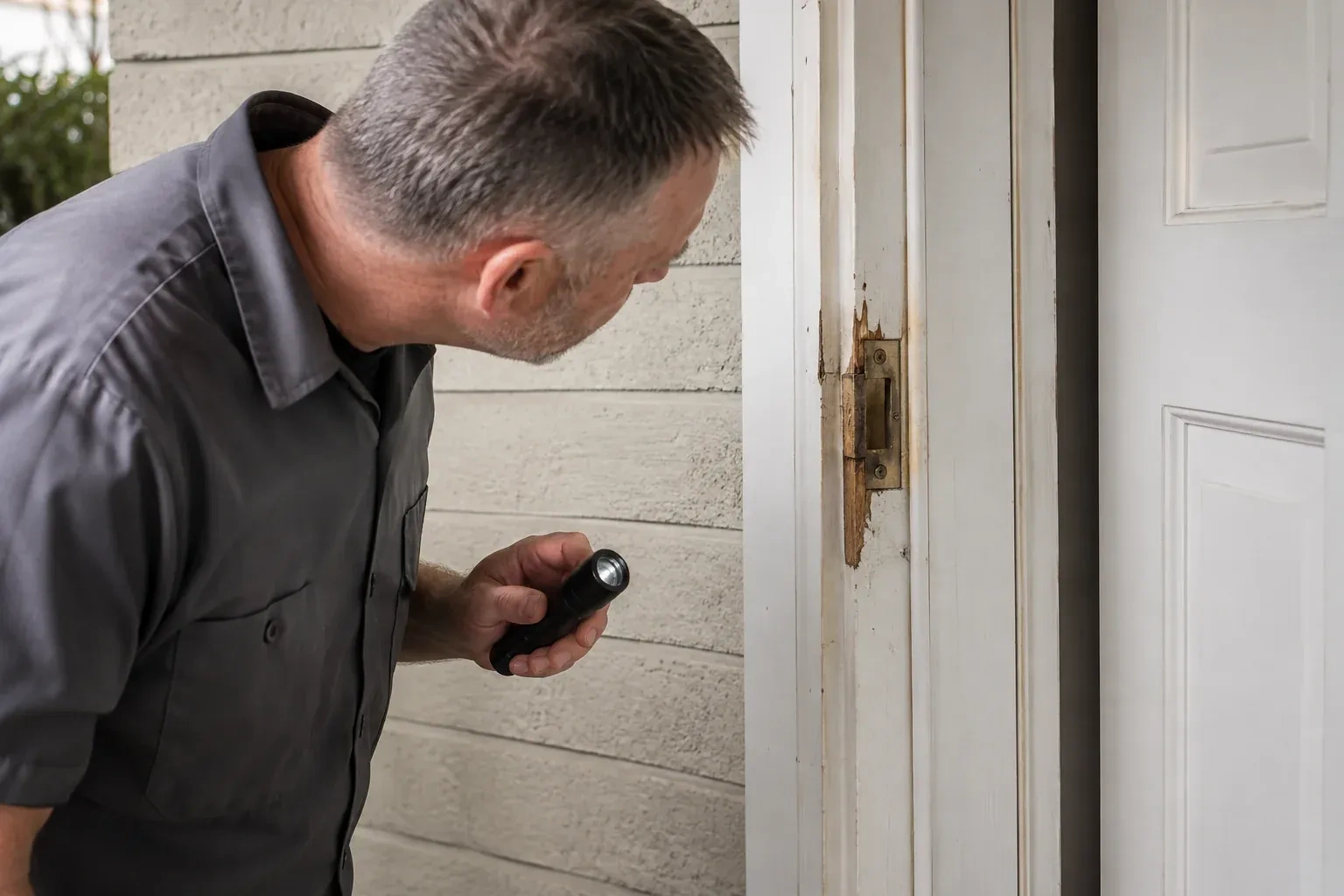
Nothing on the door is touched until it has been photographed as found. The locksmith records the door face and edge, the lock and cylinder, the strike and the wood around it, the hinges, the jamb and any broken glass, plus the tool marks that show how entry was made. These images serve the police occurrence file and the insurance claim, where insurers ask for damage to be documented and damaged property kept. You are encouraged to take your own set too. Once the record exists, hardware can come off and the repair can start without anyone later wondering what the door looked like at the beginning.
Rebuilding the strike side
The strike is where most forced doors failed, so it is rebuilt rather than reattached. The old plate comes off and the bolt pocket is cut to full depth, since a pocket that is too shallow stops the bolt from extending completely and leaves it easier to push back. A security strike with a boxed pocket is set flush into the jamb, its long screws driven through the jamb and shim space into the wall stud, with the longest screws placed nearest the door stop where the bolt bears. Pilot holes are drilled first so the screws seat without splitting the repaired wood. The bolt now pushes against framing lumber instead of two short screws in soft trim.
Watching the repair settle
Wood that has been split and glued back, and screws that have been driven into fresh pilot holes, settle over their first few weeks. Check after a month that the bolt still throws without effort and that the strike and hinge screws are snug, then repeat at each change of season, since humidity swells doors in summer and shrinks them in dry winter air. A door that starts to need a shoulder, or a bolt that begins to catch on the strike lip, is asking for a small adjustment before it becomes a problem. Whatever lubricant and interval that new cylinder's own maker specifies keeps the key turning cleanly.
Break-In Damage Lock Repair
In the van
- Anti-lift blocks and foot bolt
- Hinge reinforcement plate
- Wrap-around door edge reinforcer
- Rekeying pins and key blanks
- Replacement cylinder or core
What affects the quote
Same fees day, night or weekend
1Door edge reinforcement
A wrap-around edge reinforcer is added when the wood around the bore is crushed or split. It is a separate part, chosen to suit the door thickness and the hardware going into it.
2Keys cut
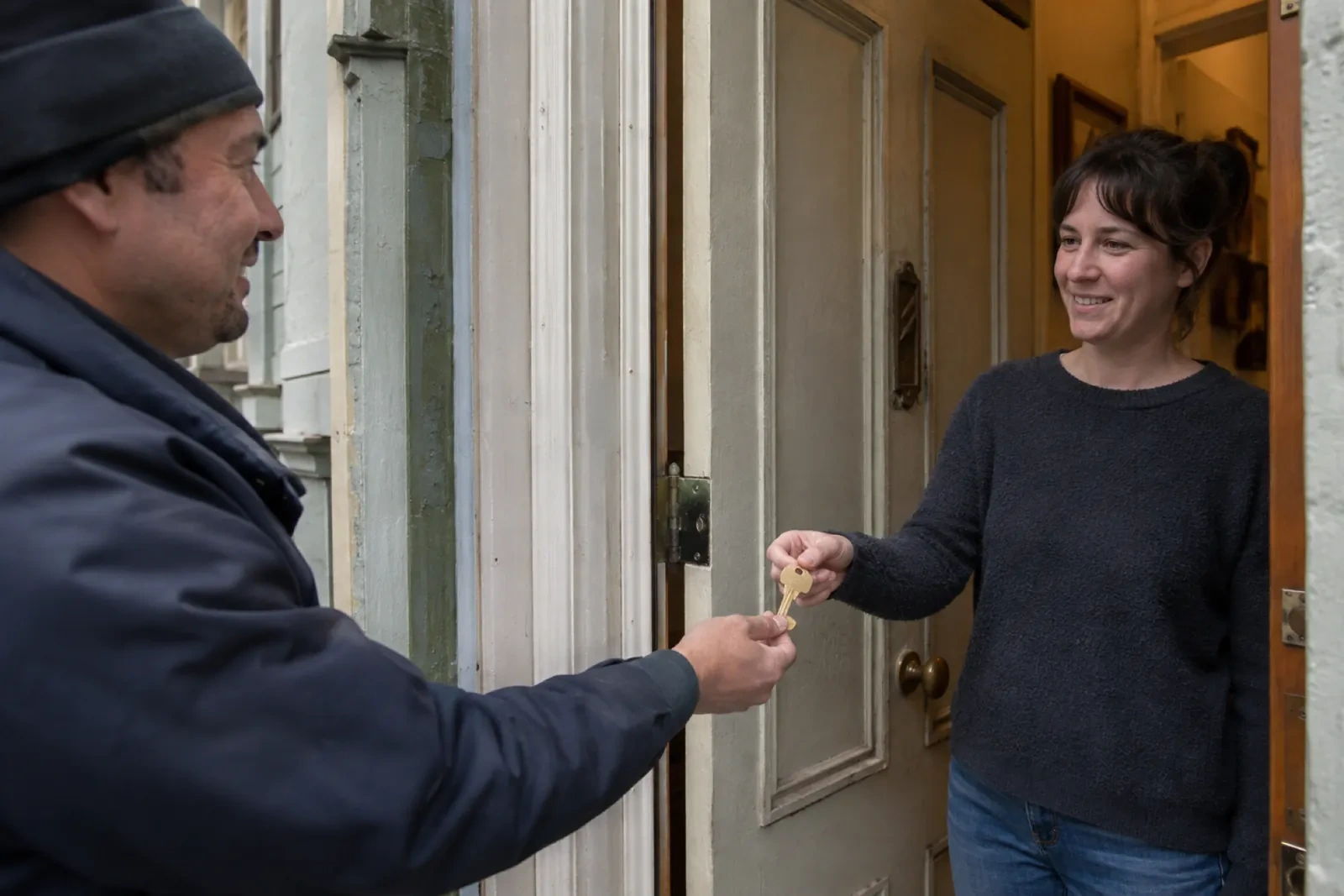
New keys are cut from the fresh pinning and counted separately: enough for each adult, the dog walker and a trusted neighbour, however many you decide you need.
3Lock failure or frame failure
Replacing a lock is hardware and fitting time. Rebuilding a strike side with a boxed strike, epoxy and long screws into the stud is carpentry as well, and is quoted as its own line.
Break-In Damage Lock Repair: questions
Someone reached through the sidelight to turn the thumb-turn. Should I fit a deadbolt keyed on both sides?
It is tempting, but a thumb-turn lets everyone in the household leave by that door without hunting for a key, special device or special knowledge, so a keyed inside cylinder is the wrong fix. Better answers are a tested security-film system or laminated glass in the sidelight to slow an arm from passing, moving the deadbolt beyond arm's reach of the glass where the door allows, and a glass-break sensor if you have an alarm.
Can the locksmith start before the police have finished?
The door is left as found until the police have seen it or said they will not attend. What can happen in the meantime is planning: the locksmith can look at the damage, photograph it, measure for hardware and prepare the temporary securing so that the moment the scene is released the work begins. Nothing is removed or moved before then, because the marks on the door are part of the report.
Will my insurer want to see the damage before it is repaired?
Insurers ask policyholders to document the loss, keep damaged property and hold on to receipts, and a securing visit is expected rather than discouraged, because an open door invites more loss. Photograph everything as found, keep the broken hardware in a bag, keep the invoice, and call your insurer as soon as the house is safe. The adjuster can see the old parts and the photos; the door itself need not stay open.
Lockout Services
- Business Lockout ServiceAfter last night's power flicker the card reader beside the clinic door shows nothing.
- Broken Key ExtractionThe apartment key snapped mid-turn, leaving the cylinder twisted halfway between locked and open.
- Seized & Jammed Lock OpeningThe key turns a full circle without any resistance and the deadbolt stays exactly where it is.
Break-In Damage Lock Repair near you
The services offered in Brampton answer the questions a door eventually asks. Who else has a key? Why does the bolt drag? Would a stronger cylinder be worth it? Can staff leave without a key? How do I open the safe my father left? Each answer is on the pages below.