Locksmith · Brampton
Practical advice
What should you do the day you move in? How do you know if a lock is worth keeping? Why does your car key work some days and not others? These notes answer the questions that come up again and again, in enough detail to be useful and no more.
- Issue 1Gate & Building Entry Locks: inside the visitGate hardware tends to struggle most in the season that stresses it hardest, and a cylinder or closer that has been sluggish all autumn rarely improves once the weather turns. Booking this service…Read
- Issue 2Master Key System Design: preparing for the visitA new hire at the shop gets handed whatever spare key happens to be in the drawer, and it turns out to open the stockroom, the back office and the safe room all at once. The owner realizes nobody…Read
- Issue 3Car Key Replacement: comparing quotesIt depends on the starting point. Adding a spare to a car with a working key is often the shortest kind of visit.Read
Curious about the process?
Lockout Services
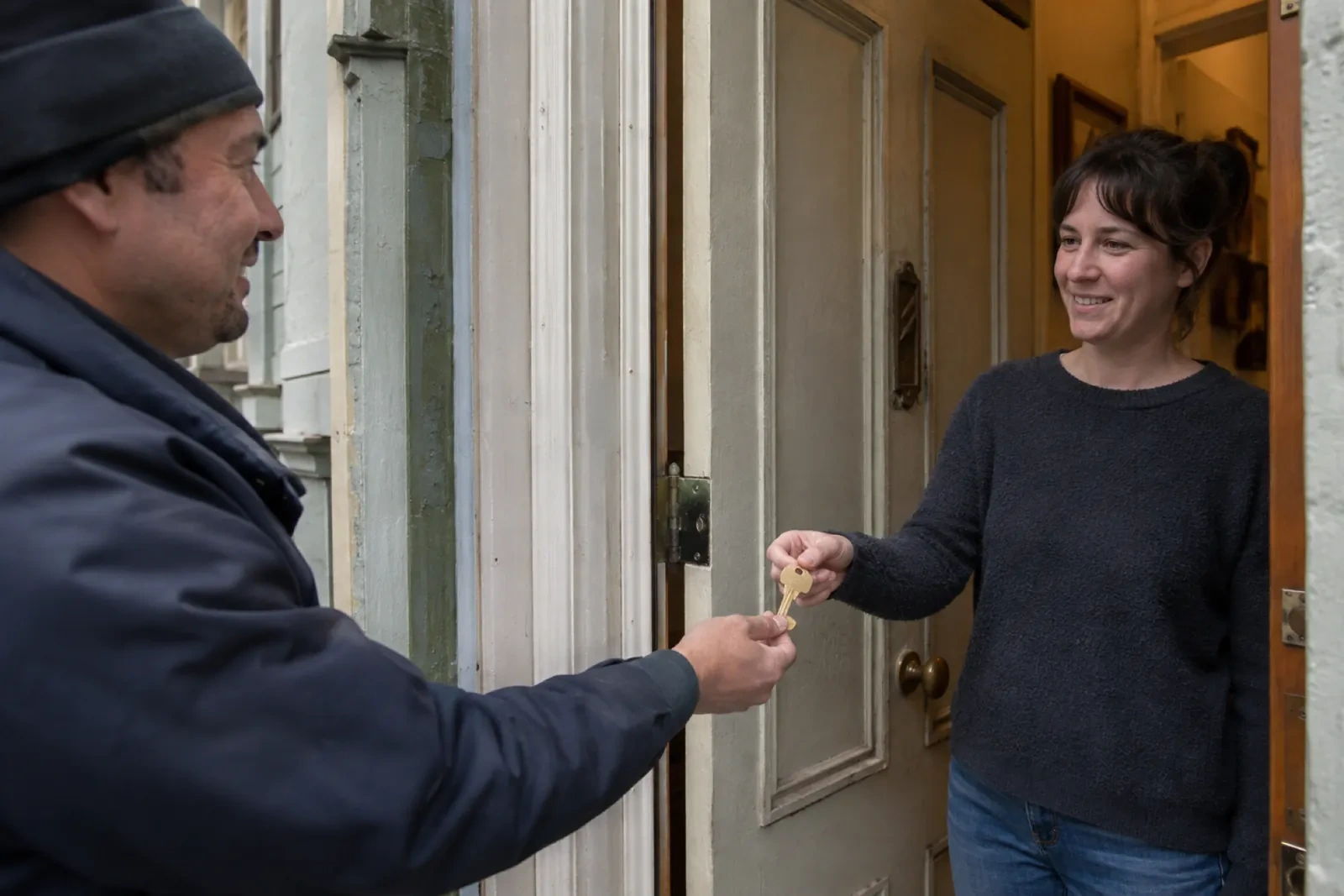
What happens if my identification is not convincing enough on the spot?
The work pauses rather than proceeds, and the locksmith helps you find another route: a neighbour or building manager who can confirm you live there, a document on your phone, a family member who can bring paperwork, or completing the check inside after entry when the documents are behind the door. Verification protects you as much as anyone, because the same standard applies to whoever might one day claim to live at your address. Home Lockout Service
Can we put a keyed deadbolt on both sides of the back door for extra security?
On a door people leave through while the building is occupied, the door needs to open from inside with one motion and no key, so a key-both-sides bolt is not the right tool there. Security is added instead with a heavy-duty exit device and a reinforced strike, a keyed trim outside, an alarm contact, or a door position sensor on the access system, all of which keep the way out clear. Business Lockout Service
Does the glue trick work?
It is a well-known idea and a poor one. A drop of adhesive on the other half rarely bonds to a piece of brass sitting in a tight keyway, and what it does bond to is the cylinder, the pins and the face of the lock. That film then has to be dissolved before proper extractors can slide in. Keep the halves apart and dry. Broken Key Extraction
Someone reached through the sidelight to turn the thumb-turn. Should I fit a deadbolt keyed on both sides?
It is tempting, but a thumb-turn lets everyone in the household leave by that door without hunting for a key, special device or special knowledge, so a keyed inside cylinder is the wrong fix. Better answers are a tested security-film system or laminated glass in the sidelight to slow an arm from passing, moving the deadbolt beyond arm's reach of the glass where the door allows, and a glass-break sensor if you have an alarm. Break-In Damage Lock Repair
Change or Rekey Locks
Will I need to prove I own or rent the home?
Yes, and it is a welcome part of the job. Rekeying decides who can enter, so the locksmith confirms the person asking has the standing to make that decision. For an owner that means photo identification alongside a document that links them to the property, for instance a property tax notice or the closing statement. A manager brings the owner's written authorization. A tenant mentions that the landlord has agreed and will be given a key, since tenancy rules here expect both to hold one. Lock Rekeying
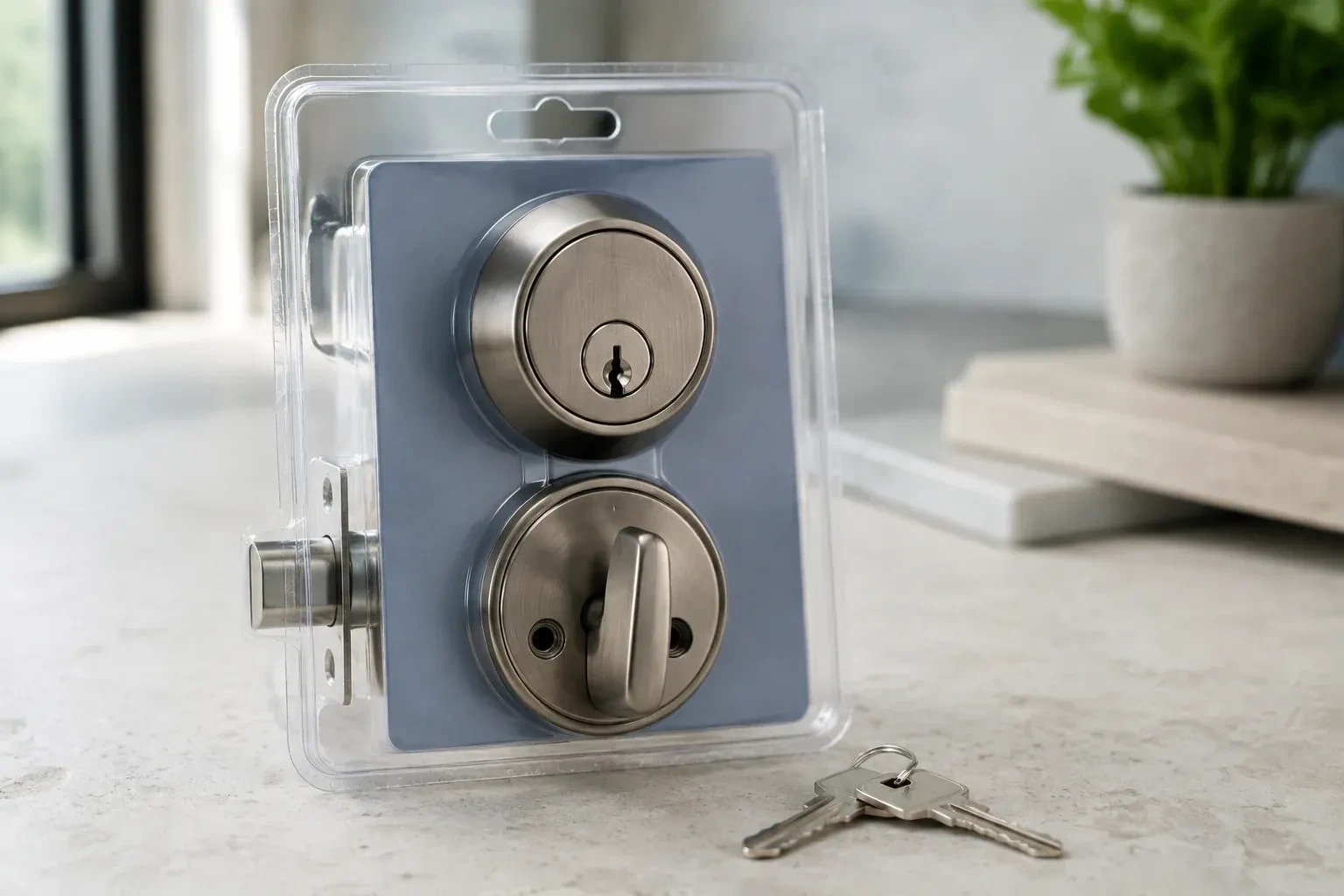
I rent. Can I have a deadbolt installed on my unit door?
You can, with a conversation first. Tenancy rules in this province expect a tenant to have the landlord's consent before changing locks and expect the landlord to hold a key, so ask in writing and share the plan. Many landlords welcome a proper bolt. The locksmith can key the new cylinder to the building's existing key where the keyway allows, and leave a note of the model and keys cut for the building manager. Deadbolt Installation
Can every door in the house work from one key?
Yes, provided the cylinders share a compatible keyway, which the locksmith checks when choosing hardware. New cylinders are pinned on site to a single new key and any existing locks worth keeping are repinned to match. Front, back, side and garage doors commonly end up on one key, and a shed or gate padlock can join them. You then decide how many copies exist and who holds each. Lock Replacement & Upgrade
What do I get at the end of the visit?
A lock you have tested yourself from both sides, keys counted into your hand with a spare, any parts that were removed if you want them, and a short written note of what was done: case type, parts replaced, keys made, strike adjusted. For a bit-key lock the locksmith keeps the details needed to cut further keys later. You also get shown where the yearly drop of oil goes. Vintage Mortise Lock Service
High Security Locks
What should I have ready before the visit?
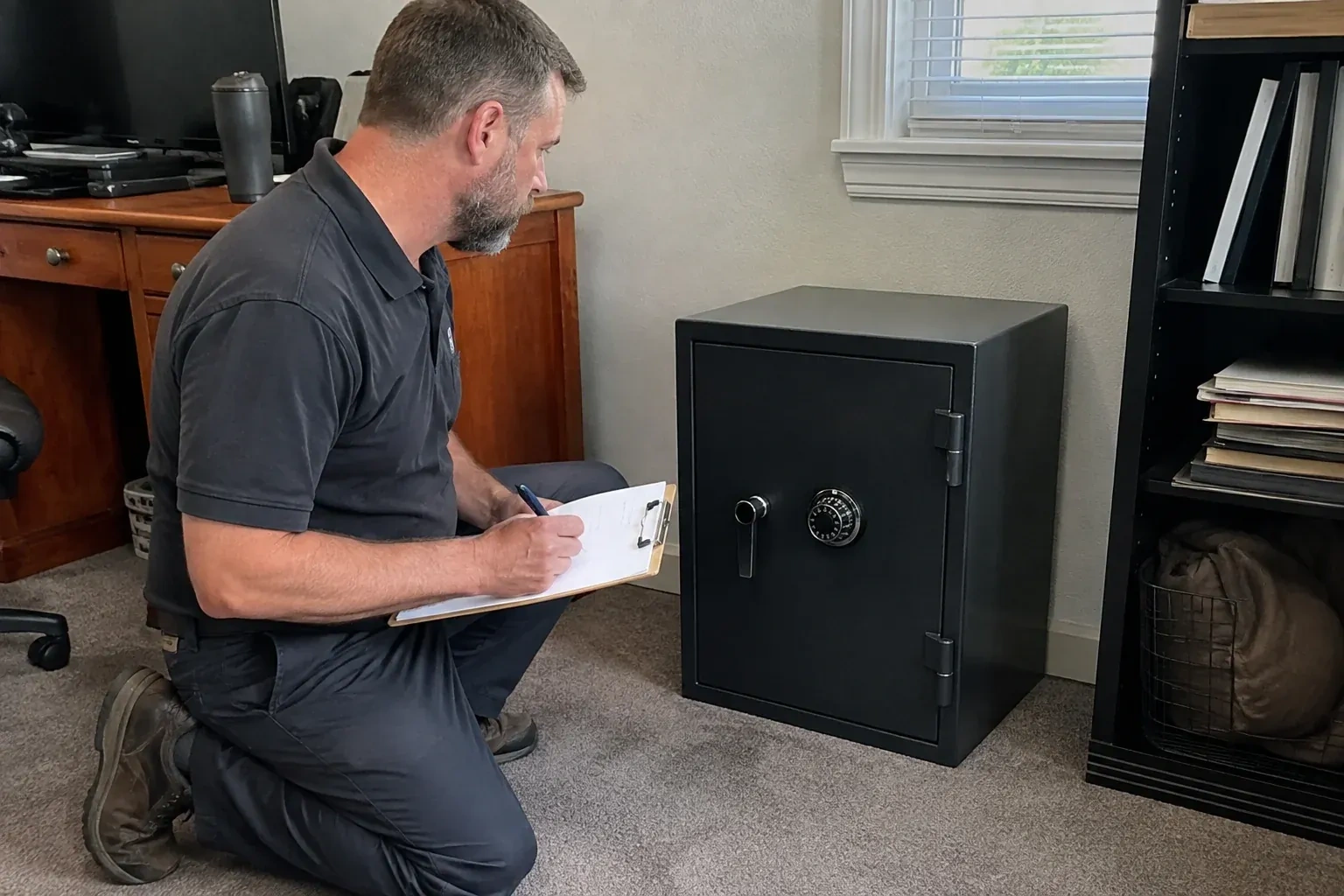
The safe's brand and model if you know them, whether the lock is a dial, a keypad or a key, roughly how old the safe is, and how the combination was lost or forgotten. Mention whether the safe holds anything with its own handling needs, such as firearms or business records, and how many people should have the new code afterward. Safe Opening & Combination Change
What is involved in servicing an older safe instead of replacing it?
Servicing works through the same checks as a new installation in reverse: the bolt-work is opened, cleaned, and lubricated, the lock is tested and adjusted if it binds, the anchoring underneath is confirmed or added if it was never done, and batteries are replaced if the lock is electronic. Many older safes have solid steel bodies that outlast the mechanism inside them, which makes servicing a practical route rather than starting over. Safe Installation & Servicing
How long does the installation take?
A cylinder swap with new keys on one door is a short visit. A new deadbolt, reinforced strike and frame repair takes longer, and several doors keyed to a plan take longer again, mostly in bench time pinning cylinders. The locksmith gives you a realistic estimate once the doors have been looked at, because the frame condition and the door preparation matter more than the count of locks alone. High Security Locks
Commercial Locks
Can the work be done while we are open?
Yes, and many businesses prefer it. The locksmith works one door at a time, finishing and testing each before starting the next, and leaves the main entrance until a quiet moment or until after closing. Doors staff are using are done last and their new keys are handed over first. Where a business would rather nobody sees the work, an early morning or after-hours window is arranged instead. Commercial Rekeying
Can key duplication be restricted so copies cannot be cut elsewhere?
Yes. With a restricted or patented keyway, blanks are only available through the manufacturer's authorized record, so a copy is not cut at an ordinary hardware counter without going through that channel. This does not make a key impossible to duplicate, but every legitimate copy passes through a record the owner controls, which a standard keyway cannot offer. Master Key System Design
Can different doors run on different schedules?
Yes, and this is one of the more useful parts of the system. A front office can unlock for regular business hours, a stockroom can allow only two credentials at any hour, and a loading dock can release only during a set delivery window. Schedules are set per door and per access level in the controller, and can be changed at any time without touching the hardware itself. Access Control Installation
Is delayed-egress hardware allowed here?
Delayed-egress locking has a defined place in the codes that cover it, generally paired with sprinkler protection and a fire alarm system, and it is not a way to lock a door indefinitely; a short delay still releases on its own once the push is held, and always releases as soon as a fire alarm signal arrives. Whether it suits a given opening depends on the occupancy and the authority having jurisdiction, so it is confirmed with them before it is specified. Panic & Exit Hardware
Car Keys
The whole car is dead, not just the fob. Can you still open it?
Yes. When the interior lights, horn and remote are all silent, the car's own twelve-volt battery has run flat, and the fob has nothing to talk to. The door is opened through the mechanical cylinder or with a wedge and reach tool; loose or corroded connections and other faults can look the same as a dead battery, so it is checked and confirmed safe before a jump pack brings the car back to life. If the battery will not hold a charge, you will know before the locksmith leaves. Car Lockout Service
How many keys should a car have?
Two working keys is the sensible minimum, and it is what most vehicles left the factory with. One lives on your ring; the other lives somewhere safe away from the car. With two, any future key work is an add-a-key job rather than a reset from nothing. Households that share a vehicle, or owners with a remote starter on one fob and a plain key for the valet, sometimes prefer three. Car Key Replacement
Is there a reason to make a spare now rather than waiting until the original is lost?
The whole process depends on having a working key to read or trace from, so making the spare while that key still exists is simpler than the alternative of proving ownership without any key present and building access from scratch. A spare made now also means a future lost key is solved by reaching for the second one already tested and waiting, rather than starting the whole process from nothing. Spare Car Key Duplication
Is fixing a lost key different from just adding a spare?
Yes. Adding a spare while every existing fob still works only involves registering the new one. A lost key involves that same registration plus removing the missing fob's authorization following that vehicle's own procedure, since leaving it active means whoever has it can still use it; some vehicles also relearn the fobs you keep, and a mechanical blade in the lost fob is ruled out by rekeying the matching lock. The two situations share a first step but not a last one. Key Fob Programming
On-site assessment preferred
Request a visit
Talk to us about access for your staff. Ask about a spare key before you need one.